TCSDR GUIDES YOU THROUGH POCKET DOOR TRACK REPLACEMENT
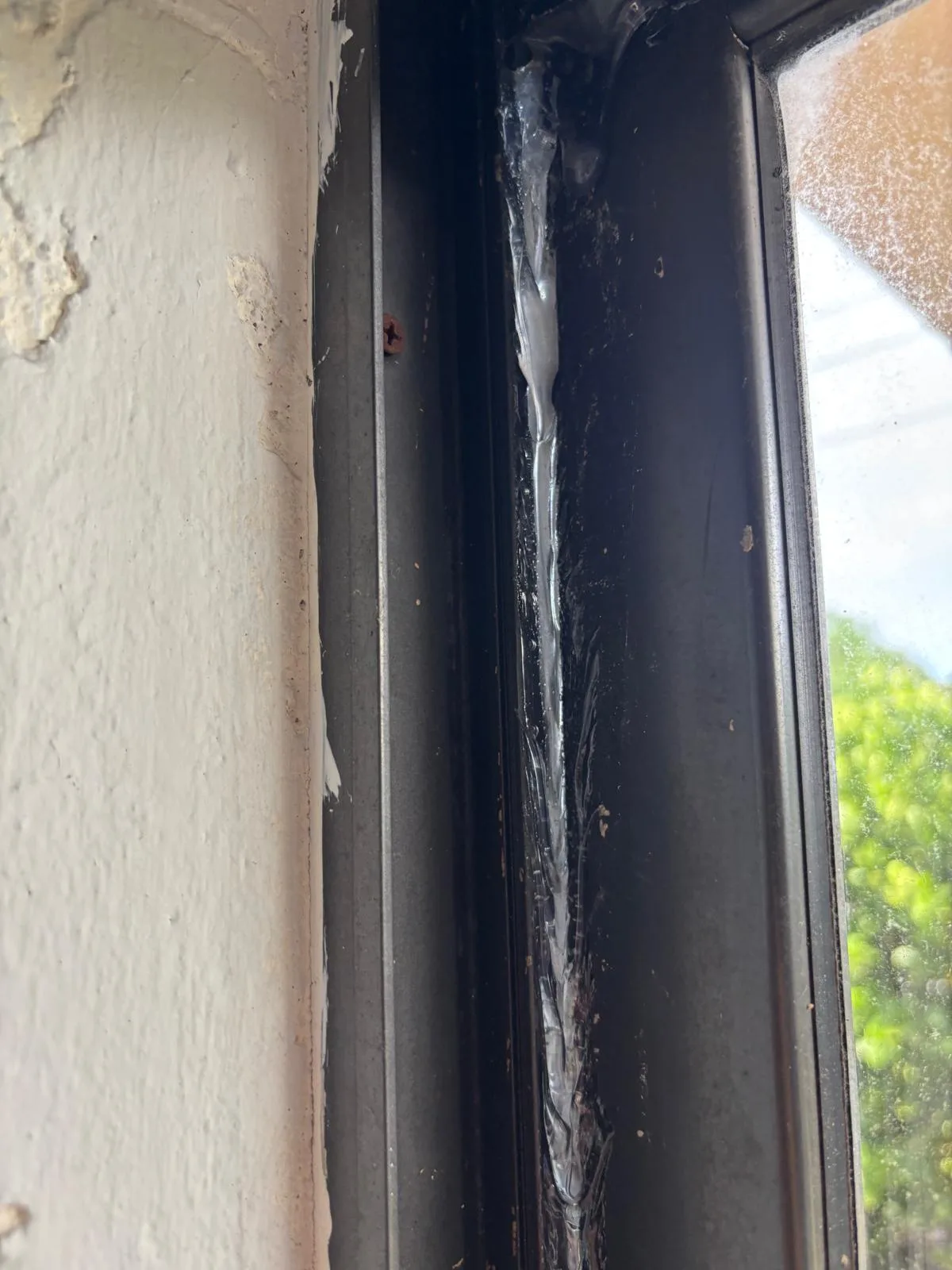
Pocket door tracks fall into two categories: surface-mounted header rails visible above the door opening, and concealed overhead tracks set inside the wall cavity. Treasure Coast Sliding Door Repair inspects the header and door reveal to classify the system before quoting, because concealed tracks require wall access that surface-mounted tracks do not.
Surface-mounted tracks are unbolted after the door panel is lowered off the hangers. Concealed tracks require removing the door casing trim and, in most Fort Pierce homes, a section of drywall above the door opening to expose the track channel anchored to the structural header. TCSDR protects surrounding finishes during this phase to minimize patch work.
The replacement track - typically a steel or aluminium overhead rail - is fastened to the structural header with load-rated screws spaced per the manufacturer's specification. TCSDR levels the track precisely: a track that is even 1/16 inch off level causes the door panel to drift open or closed under gravity. After installation, the door is re-hung, the hanger wheels adjusted, and the door tested for smooth, drift-free travel.
Treasure Coast Sliding Door Repair (TCSDR) is a Florida DBPR-licensed contractor with 75 five-star reviews serving Fort Pierce homeowners and property managers. The team handles both pocket door and patio sliding door systems across ZIP codes 34947, 34949, 34950, 34951, and 34982.
TCSDR replaces worn, bent, or corroded pocket door track rails and hanger assemblies. The work scope ranges from a straightforward surface-mount header rail swap to a full concealed-track replacement requiring wall access. All installations are leveled to manufacturer specification and meet Florida Building Code fastening requirements for overhead door hardware.
Service covers all Fort Pierce neighborhoods including South Beach, Indian River Estates, Lakewood Park, and White City. TCSDR serves properties near Fort Pierce Inlet State Park, the Manatee Observation Center, and the Sunrise Theatre district.
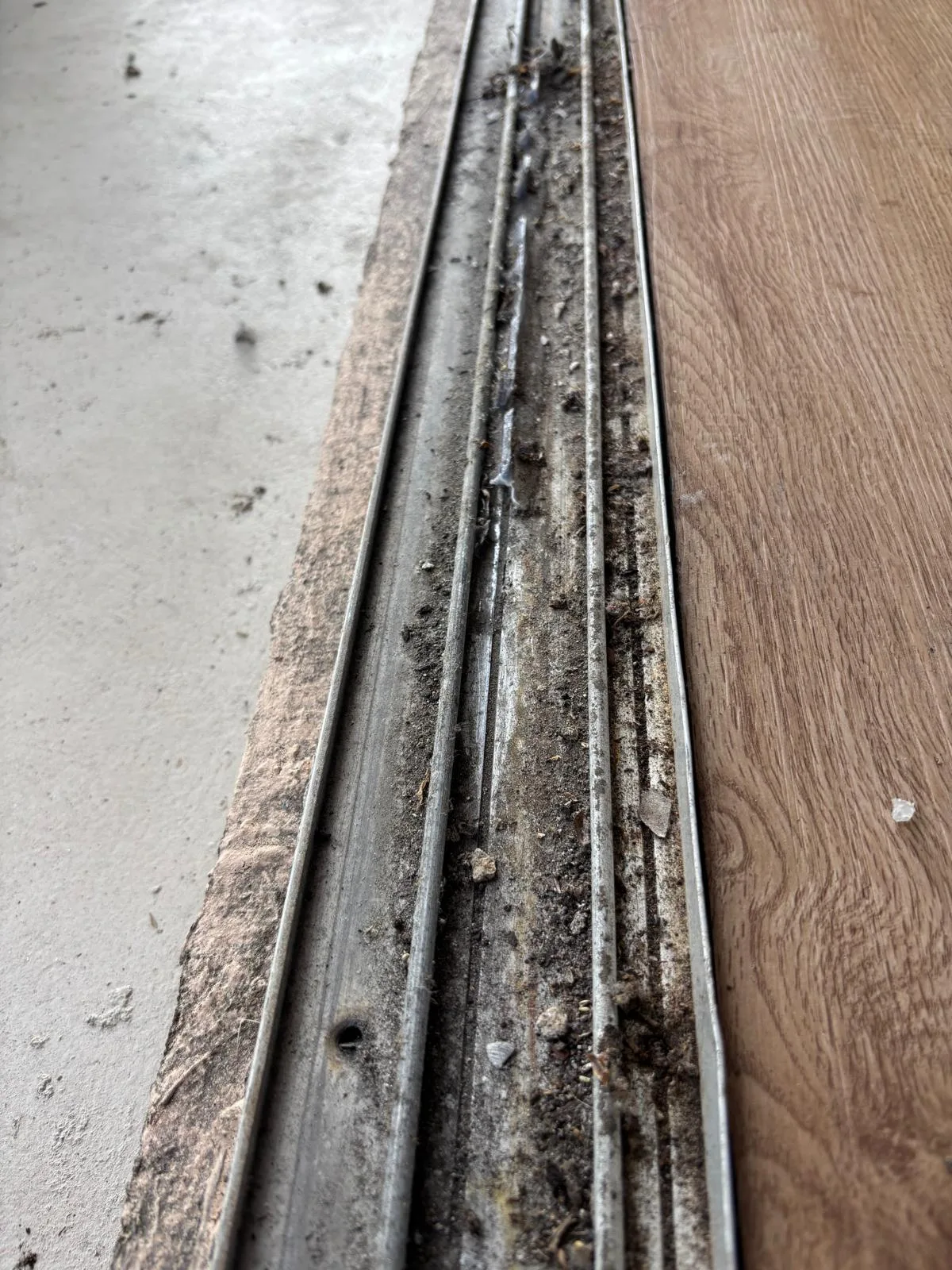
A pocket door track is the overhead rail along which the door panel's hanger wheels roll as the panel slides into the wall cavity. Unlike a patio sliding door with a bottom floor track, pocket doors hang entirely from this overhead rail and rely on it for both their travel path and their vertical support. The track is typically a formed steel or aluminium channel profile attached to the structural header above the door opening.
Track failure in Fort Pierce homes occurs through several mechanisms. Corrosion from high indoor humidity and salt-air infiltration attacks the steel track surface, causing rust that roughens the roller path and eventually seizes the hanger wheels. Aluminium pocket door tracks - less common but present in some 1990s and 2000s construction - develop the same corrosion issues as exterior patio door tracks in coastal environments.
Physical deformation is the other major failure mode. The track can be bent by an over-loaded door panel (heavy solid-core wood doors hung on standard hardware), by a door that was forced past its stop, or by header movement from wood shrinkage over time. Once bent, the track cannot guide the hanger wheels smoothly and the door begins to bind, skip, or fall off the track entirely.
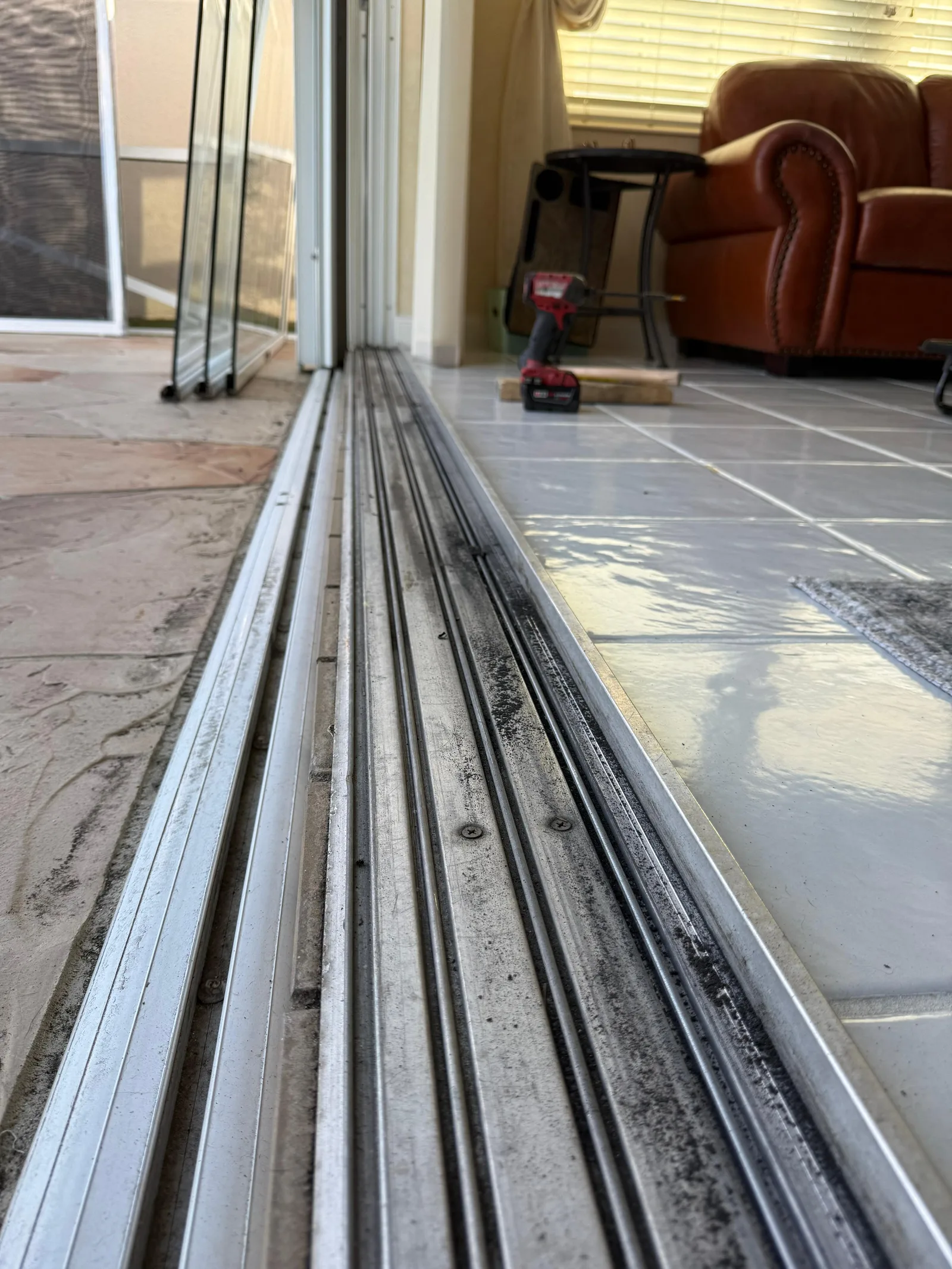
Surface-mounted pocket door tracks are visible on the face of the header above the door opening. They are typically found in commercial installations, laundry room applications, and some remodels where running a concealed track through an existing wall was not practical. Replacement is relatively straightforward: the door panel is lowered, the old track is unbolted, and the new track is fastened in its place.
Concealed tracks are set inside the wall framing above the door opening during original construction. They are invisible from the room and can only be accessed by removing the door casing trim and the drywall above the door opening. In Fort Pierce homes with plaster walls or tile surrounds near the door - common in older South Beach bungalows and newer condo developments - the access work adds significant time and requires a finish patch after the track is replaced.
TCSDR assesses the track type during the initial inspection and provides a scoped estimate that includes the access work, track replacement, re-hanging, adjustment, and finish protection. There are no surprises once the wall is opened because the assessment identifies the track type and condition before any wall work begins.
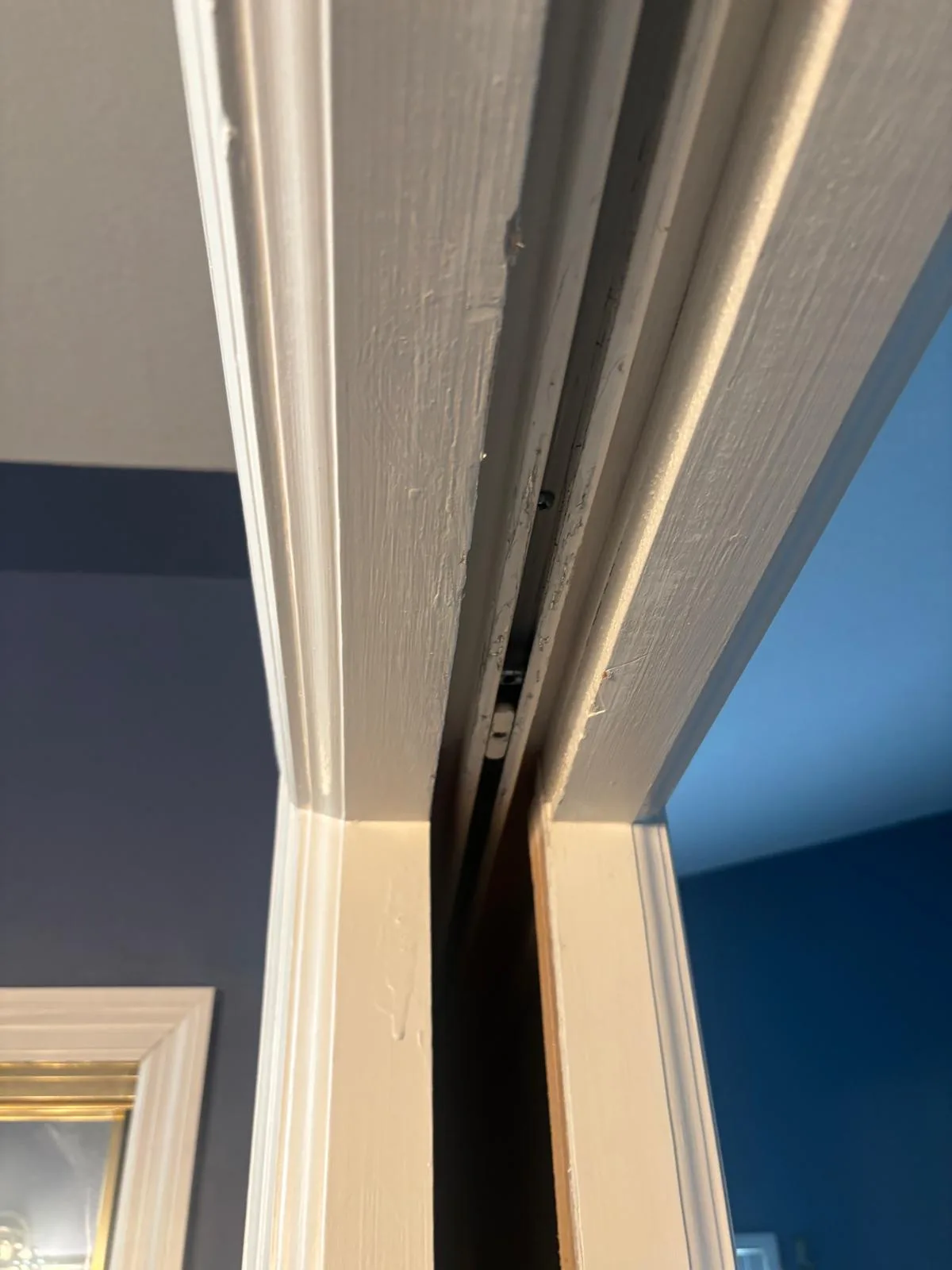
The clearest sign of track failure is a door that binds, stutters, or makes a grinding sound during travel. These symptoms indicate that the hanger wheels are encountering a rough, corroded, or deformed section of the track groove. Unlike a patio sliding door track, the pocket door track is overhead and out of sight, so damage often progresses unnoticed until the symptoms become severe.
A door that drifts open or closed on its own points to a track that is no longer level - either because the header has shifted or because the track mounting screws have loosened and allowed the rail to sag. In Fort Pierce homes built on sandy fill, minor foundation movement is common and can alter header position over years, gradually pulling the track out of level.
Hanger wheel failure is sometimes mistaken for track failure because the symptoms overlap. TCSDR technicians always test the hanger wheels independently before recommending track replacement - worn or seized nylon wheels can cause the same binding and grinding symptoms at a fraction of the replacement cost. Replacing wheels on a damaged track, however, only delays the inevitable and is not a repair TCSDR recommends.
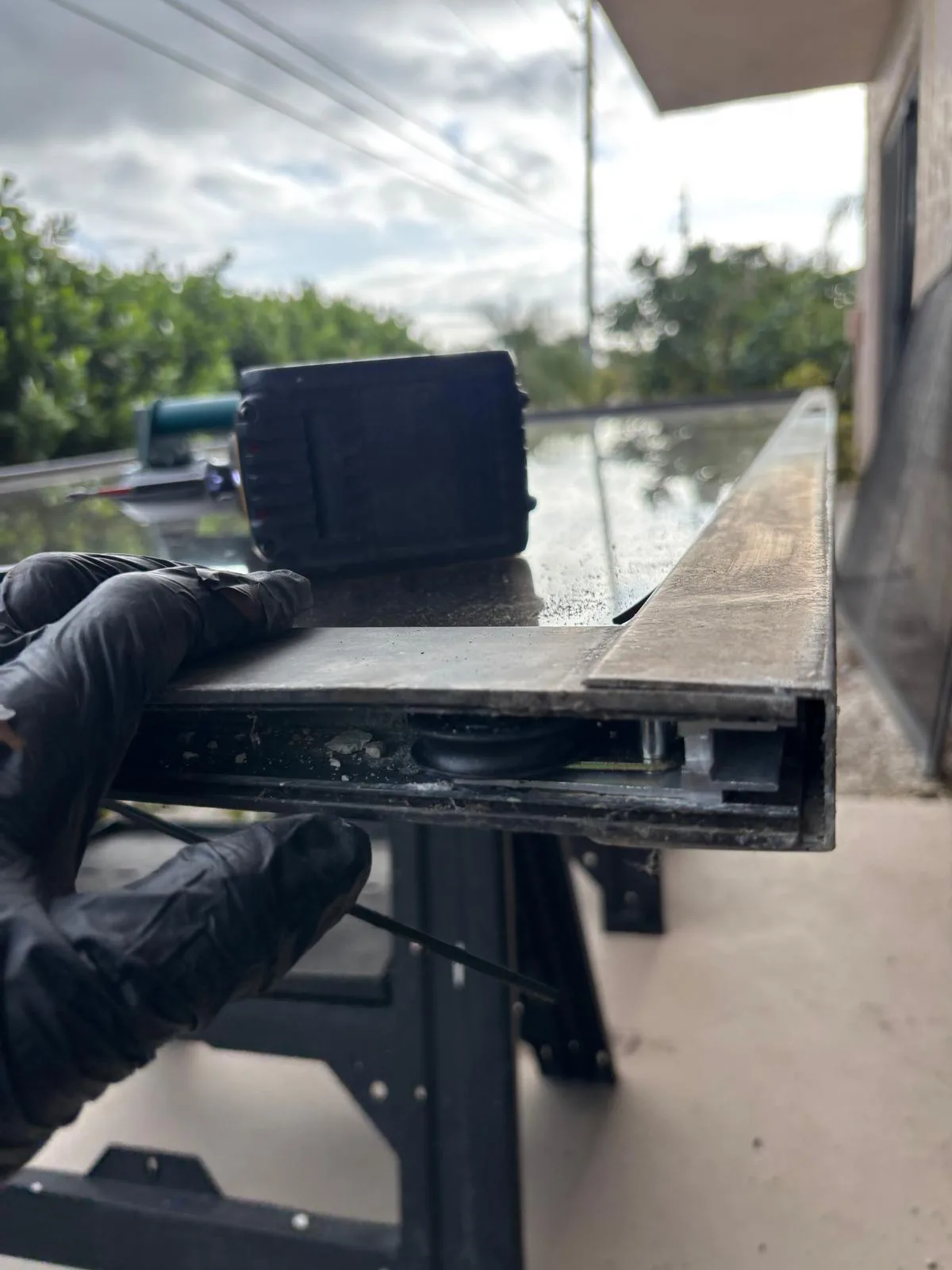
In most Florida jurisdictions, replacing a pocket door track like-for-like - same hardware type, same location, no structural changes - does not require a building permit. It is classified as routine maintenance under Florida Building Code Section 105.2, which exempts repair and maintenance work that restores existing components to their original condition without altering load paths.
However, if the track replacement involves modifying the header, widening the door opening, or changing the door panel weight class - for example, upgrading from a hollow-core to a solid-core door - a permit is required and the work must meet current Florida Building Code requirements. TCSDR advises homeowners on permit requirements during the scoping conversation and can pull permits for work that requires them.
The Florida Department of Business and Professional Regulation (DBPR) requires that any contractor performing structural modifications to door openings hold an active contractor license. TCSDR holds the required DBPR license and provides documentation upon request for homeowner records or HOA submissions.
A surface-mounted track replacement on a standard single-panel pocket door takes two to three hours including door removal, track swap, re-hanging, leveling, and adjustment. The door is functional at the end of the visit with no finish work required beyond re-setting the door casing trim.
A concealed track replacement adds time for wall access: removing the door casing, cutting out the drywall section above the opening, replacing the track, and re-closing the opening. The structural work is typically one to two hours; the drywall patch and finish work can add another one to two hours if done in the same visit, or may be scheduled as a separate appointment if the homeowner is performing the finish work independently.
TCSDR provides a realistic timeline estimate before starting and communicates any unexpected complications - such as discovering that the original track was custom-fabricated rather than standard stock - that might affect the schedule. Parts for non-standard systems may require a return visit if the replacement track cannot be sourced from the service van inventory.
National-average pricing for pocket door track replacement ranges from $150 to $450 depending on track type (surface-mounted vs. concealed), door panel weight, and whether wall access work is required. These are national averages - your on-site Treasure Coast Sliding Door Repair technician provides a binding quote before any work begins.
A surface-mounted track replacement with hanger wheel service typically falls at the lower end of this range. A concealed track replacement with wall access, patch, and full hardware replacement falls toward the higher end. Commercial pocket door systems with heavier hardware and wider tracks price similarly to the upper residential range for the mechanical work alone, not including any finish restoration.
TCSDR provides itemized quotes that separate the track hardware cost from the labor so homeowners can make informed decisions. If the hanger wheels are found to be serviceable during the wall-access phase, TCSDR will note that on the quote and reduce the scope accordingly.
Pocket doors and patio sliding doors share the same fundamental operating principle - a panel that translates laterally along a track - but the track geometry and the forces involved differ significantly. Pocket door tracks are overhead and carry the full weight of the door panel in tension. Patio sliding door bottom tracks carry the panel weight in compression and guide lateral travel through the roller-in-groove geometry.
This difference means that patio sliding door tracks, like the aluminium channel track repaired through TCSDR's sliding door track repair fort pierce service, wear through groove wall deformation and corrosion accumulation. Pocket door overhead tracks fail through corrosion of the roller surface, fastener loosening, and rail deformation under panel weight. The diagnostic and repair methods are distinct for each system.
TCSDR technicians are trained on both system types and carry hardware for both in the service van. When a Fort Pierce homeowner calls about a sticking interior door that turns out to be a pocket door rather than a patio slider, the team handles it with the same systematic approach and transparent quoting process.
| Service | Estimated Time | Price (national avg) |
|---|---|---|
| Pocket door track inspection and diagnosis | 30 min | Included with repair |
| Hanger wheel replacement only | 1-2 hrs | $150-$200 |
| Surface-mounted track replacement | 2-3 hrs | $200-$300 |
| Concealed track replacement (wall access needed) | 3-5 hrs | $280-$400 |
| Full pocket door hardware kit (track + hangers + guide) | 3-4 hrs | $300-$420 |
| Track replacement + drywall patch and finish | 5-7 hrs | $380-$450 |
National-average pricing - your on-site Treasure Coast Sliding Door Repair technician provides a binding quote before work begins.

Treasure Coast Sliding Door Repair handles both interior pocket door and exterior patio sliding door track repairs across Fort Pierce and the wider St. Lucie County area. The company holds an active Florida Department of Business and Professional Regulation (DBPR) contractor license and carries full liability insurance. With 75 five-star Google reviews from Fort Pierce homeowners and property managers, TCSDR provides transparent scoping, reliable timelines, and durable repairs backed by a 90-day workmanship warranty.